Lab Research
Current Projects
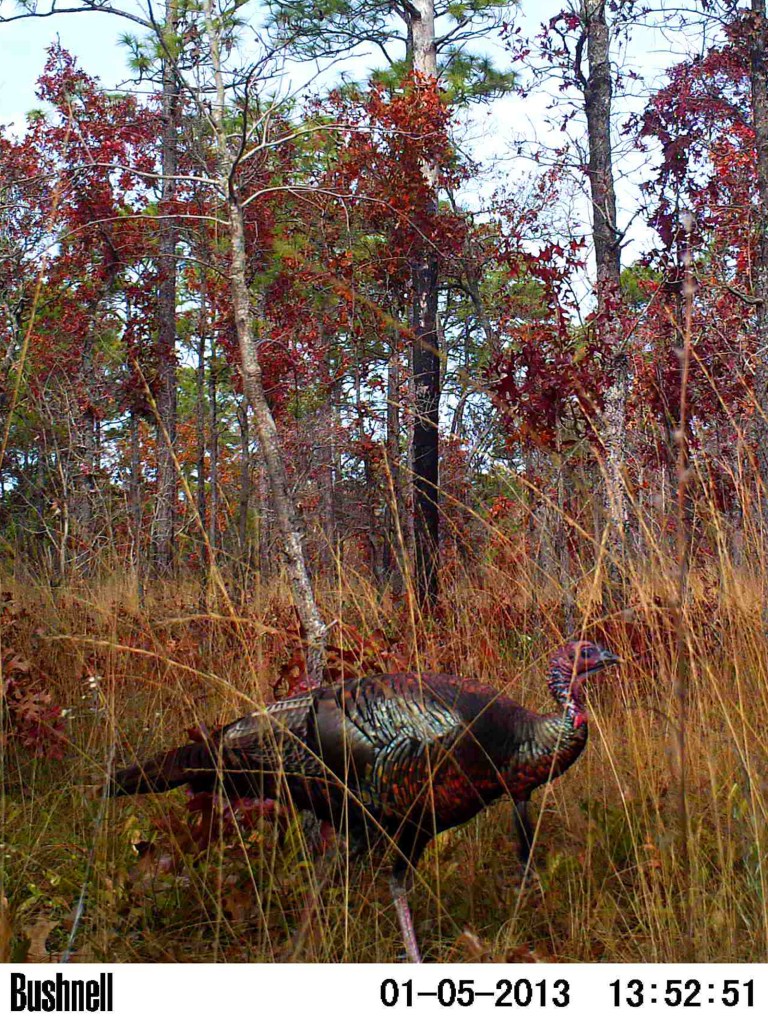
Assessing Climate Vulnerability in a Highly Adaptable, Wide-ranging, Harvested Species: Direct and indirect effects of climate change on wild turkeys across the southeastern U.S.
Wes Boone
Objectives: We are investigating how climate change may already be influencing wild turkey populations, and how this could change in the future. Specifically, we seek to determine how weather is influencing the timing of turkey gobbling and nesting, and if changes in nest timing or weather influence nest success. We will then project our findings into the future under multiple climate change scenarios. Our analyses seek to inform stewardship practices by agencies, hunters, and non-hunting conservationists alike.
Collaborators: N.C. State University, Louisiana State University, University of Georgia, Southeast Climate Adaptation Science Center
Principal Investigators: Krishna Pacifici, Christopher Moorman, Bret Collier, Michael Chamberlain, Adam Terando
Funding: U.S. Geological Survey – Southeast Climate Adaptation Science Center
Publications:
Boone, W., C. Moorman, A. Terando, D. Moscicki, B. Collier, M. Chamberlain, & K. Pacifici. 2023. Minimal shift of eastern wild turkey nesting phenology associated with projected climate change. Climate Change Ecology. 6:100075.
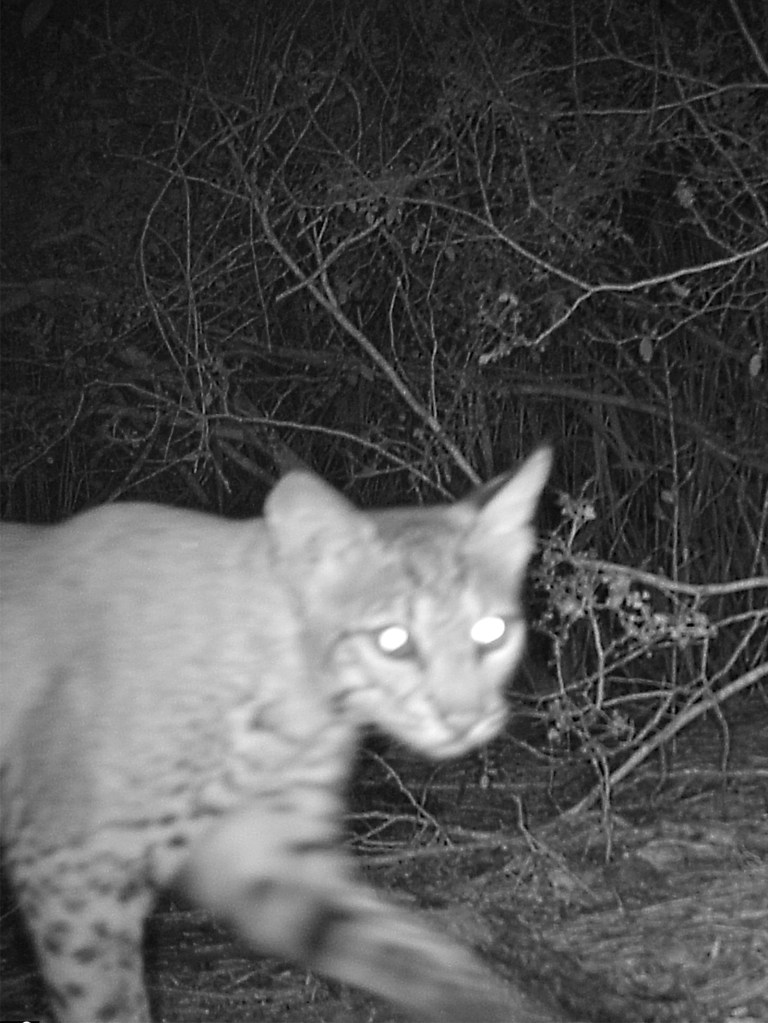
Integrated Distribution Models for North American Mammals as Tests of Niche Conservatism
Ben Goldstein
Objectives: Many species of North American mammals have distinct subspecies lineages due to divergence events during the Pleistocene era. When ecologists estimate species’ environmental associations, they often assume that all individuals of the species will respond similarly; however, this assumption might break down if subspecies divergence leads to different animal behavior. In this project, we aim to estimate statistical models to test whether subspecies lineages matter for how species respond to their environment, shedding light on the natural history of North American mammals and paving the way for more accurate range-wide distribution models.
Collaborators: N.C. State University, North Carolina Museum of Natural Sciences, Smithsonian Conservation Biology Institute
Principal Investigators: Krishna Pacifici, Roland Kays, Liz Kierepka, Mike Cove, Bill McShea, Brigit Rooney
Funding: National Science Foundation

Optimizing Landscape Planning for Co-benefits among Wildlife Populations and Agricultural Communities
Ha Do
Objectives: Wildlife management areas (WMAs) have been established not only to conserve wildlife species, but also offer hunting, fishing and other recreational services. To protect the wildlife, millions of acres throughout the Southeast have been purchased or protected. However, little knowledge is known about how these WMAs affect the human being and rural economies. This knowledge gap is problematic because decision makers do not know the net effects of expanding WMAs on local tax bases and associated public services, local businesses, or local economies. Therefore, the project will aim to quantify the value of WMAs and nearby private land parcels and develop a comprehensive technique to prioritize conservation areas. The project spans fifteen states in the Southeastern United States and Caribbean.
Collaborators: N.C. State University
Principal Investigators: Krishna Pacifici, Nils Peterson
Funding: U.S. Department of Agriculture

Multi-scale Assessment of Wild Turkey Ecology in North Carolina
David J. Moscicki
Objectives: The North Carolina Wild Turkey Ecology Study is a collaboration between North Carolina State University and the North Carolina Wildlife Resources Commission. The primary objectives of the research are to: (1) Document when wild turkey nesting begins within each of 3 regions in North Carolina (i.e., Coast, Piedmont, Mountains); (2) Determine the relative success of turkey nests in each region and the potential causes of nest failure; (3) Document the vegetation conditions where turkeys nest in each region, which will help direct habitat management to increase nesting cover; (4) Estimate the survival of female and male turkeys in each region, and determine the primary causes of mortality; Results of the study will help wildlife managers to better understand how turkeys use their environment and will direct future science-based management decisions, including habitat management and structuring the hunting season. To achieve the study objectives, we capture turkeys in each region and fit them with a radio-transmitter, track daily turkey movements and locate nests using the transmitters, and estimate survival and the impact hunter harvest has on local populations.
Collaborators: N.C. State University, Louisiana State University, University of Georgia, North Carolina Wildlife Resources Commission
Principal Investigators: Krishna Pacifici, Chris Moorman, Bret Collier, Mike Chamberlain, Chris Kreh
Funding: North Carolina Wildlife Resources Commission, National Wild Turkey Federation
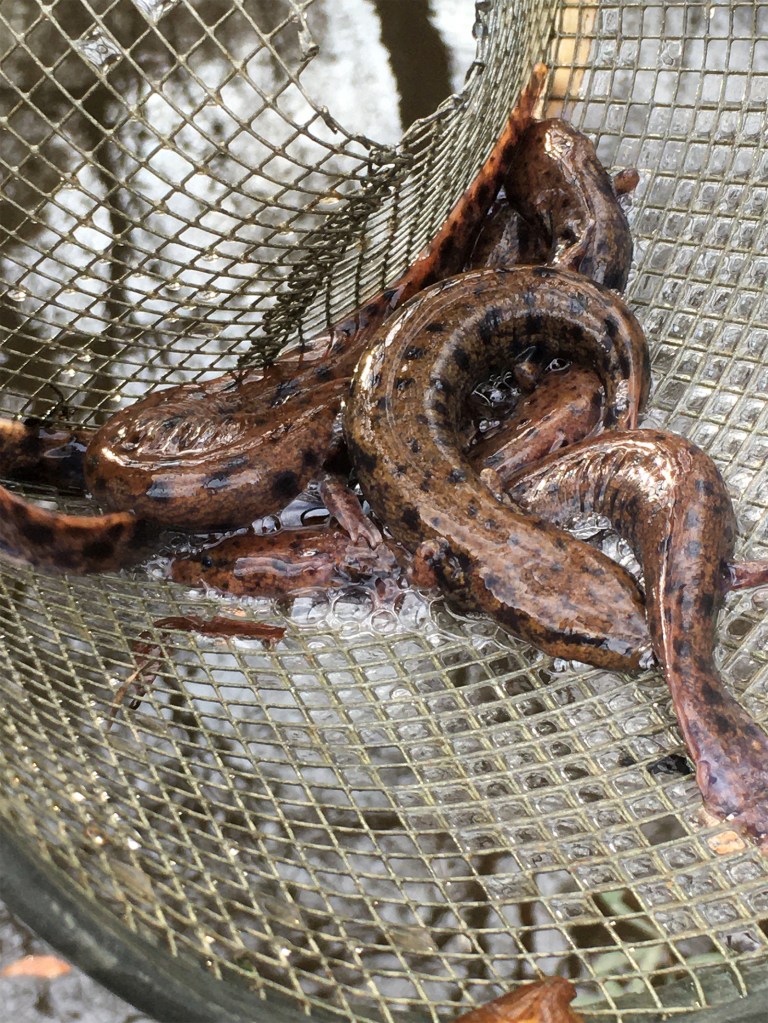
Multi-scale Assessment of the Drivers of Neuse River Waterdog Distribution and Recruitment
Eric Teitsworth
Objectives: This research seeks to identify the local and landscape-level drivers of Neuse River Waterdog occurrence and population status. Though historically common, this federally threatened and narrowly endemic species is experiencing significant range contractions as a result of past and present land use practices. Our research will help state and federal partners make informed management and recovery decisions as urbanization in North Carolina continues. Recognizing the critical role of community engagement in species and landscape recovery, we have also prioritized public outreach through written and visual media, workshops, events, and more.
Collaborators: N.C. State University, US Fish and Wildlife Service, North Carolina Wildlife Resources Commission
Principal Investigators: Krishna Pacifici
Funding: US Fish and Wildlife Service, North Carolina Wildlife Resources Commission
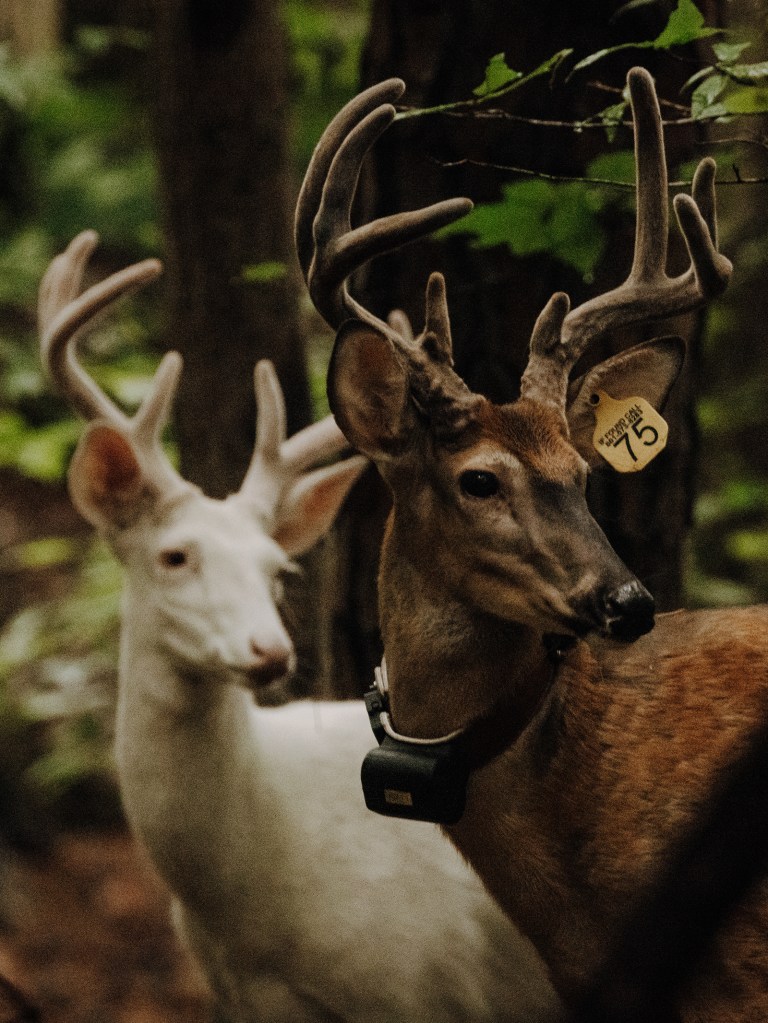
White-tailed Deer Ecology Along an Urban-rural Gradient
Mikiah Carver-McGinn
Objectives: This research investigates the impacts of urbanization on white-tailed deer. Specifically, understanding how space use, resource selection, annual survival, and cause-specific mortality of white-tailed deer vary along an urban-rural gradient. Our analyses seek to provide science-based information to inform effective management plans for deer populations in North Carolina. More information at: www.facebook.com/NCurbandeerstudy
Collaborators: N.C. State University, North Carolina Wildlife Resources Commission, United States Geological Survey, United States Forest Service, North Carolina Museum of Natural Sciences
Principal Investigators: Nathan Hostetter, Chris Moorman, Nils Peterson, Liz Kierepka, John Kilgo
Funding: North Carolina Wildlife Resources Commission
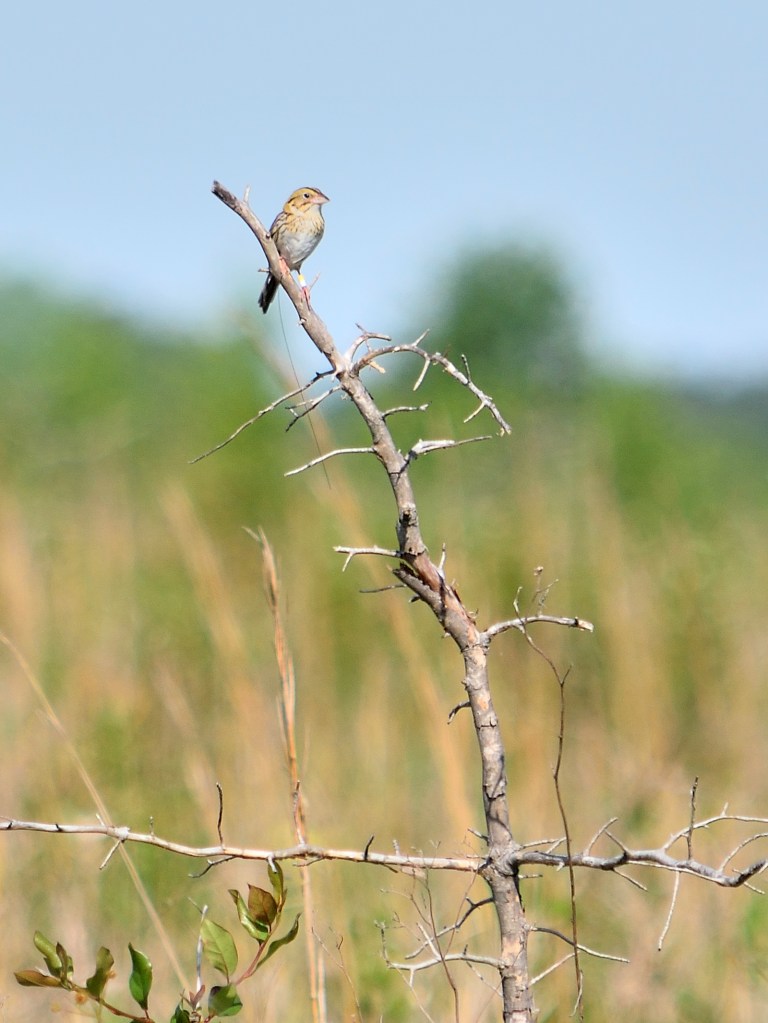
Demography, habitat use, and genetic structure of Henslow’s Sparrows in North Carolina
Emily Nastase
Objectives: The Henslow’s Sparrow is a grassland specialist, migratory songbird with a rapidly declining habitat range due to habitat loss and climate change. We are studying Henslow’s Sparrow demography, habitat use, and genetic structure to evaluate the species’ redundancy, representativeness, and resiliency in North Carolina. We capture and tag sparrows with radio-transmitters, collect blood samples, conduct distance point counts, spot-mapping surveys, and nest-searches, and collect data on vegetation structure at the site. The findings of this research will help state and federal conservation agencies identify appropriate conservation and management measures to promote the persistence of the Henslow’s Sparrow in North Carolina.
Collaborators: North Carolina Wildlife Resources Commission, Louisiana State University, United States Geological Survey, N.C. State University (Nathan Hostetter and Krishna Pacifici collaborators)
Principal Investigators: Jaime Collazo
Funding: North Carolina Wildlife Resources Commission, North Carolina State University, Southeast Climate Adaptation Science Center, US Fish and Wildlife Service
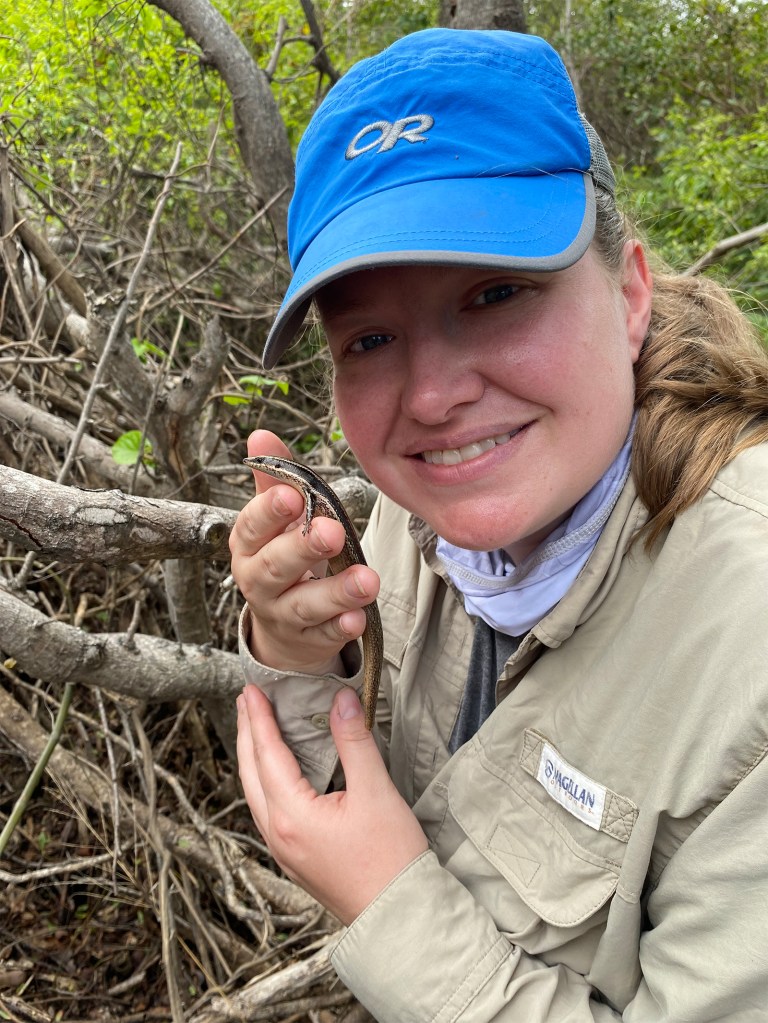
Resolving Taxonomic Uncertainty in Caribbean Skink Species
Danielle Rivera
Objectives: Information on Caribbean skink distribution and ecology is extremely limited, and there remains the possibility that some species may already be extinct. Additionally, taxonomic uncertainty exists across Spondylurus spp., as the genus was reclassified and split into multiple species in 2012 based on analyses of museum specimens. Research to support a Species Status Assessment is therefore needed to (i) resolve taxonomic uncertainty in this species complex and (ii) document skink presence, characterize morphology, and document age-classes at island-level scales. This information is critical to evaluating the listing status of these species and future efforts investigating population viability and extinction risk.
Collaborators: N.C. State University, United States Geological Survey, United States Fish and Wildlife Service, California Academy of Sciences
Principal Investigators: Nathan Hostetter, Rayna Bell, Jaime Collazo
Funding: United States Fish and Wildlife Service
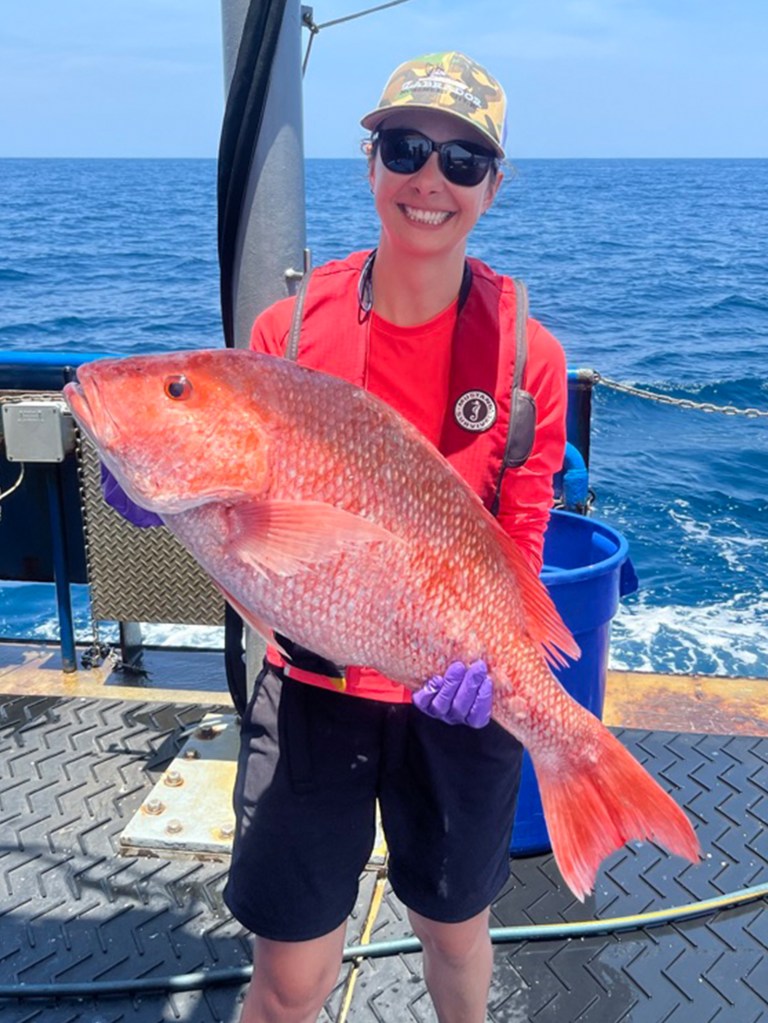
Estimation of US Atlantic Red Snapper abundance
Viviane Zulian
Objectives: The Red Snapper is an ecologically and economically important reef fish in the US Atlantic Ocean and has been estimated to be overfished since the early 1970s. This project is focused on developing statistical models to estimate the abundance of the species in the US Atlantic Ocean between North Carolina and South Florida. The estimates will be based on data from trap, camera and ROV counts, collected by NOAA and University of Florida. This abundance estimate will be independent of the stock assessment produced by NOAA but will directly contribute to future assessments and fisheries management in the region.
Collaborators: N.C. State University, University of Florida, Texas A&M Corpus Christi, NOAA Fisheries, Biometric Research
Principal Investigators: Krishna Pacifici, Nathan Hostetter, Jeff Buckel, David Portnoy, Will Patterson
Funding: NOAA – Sea Grant
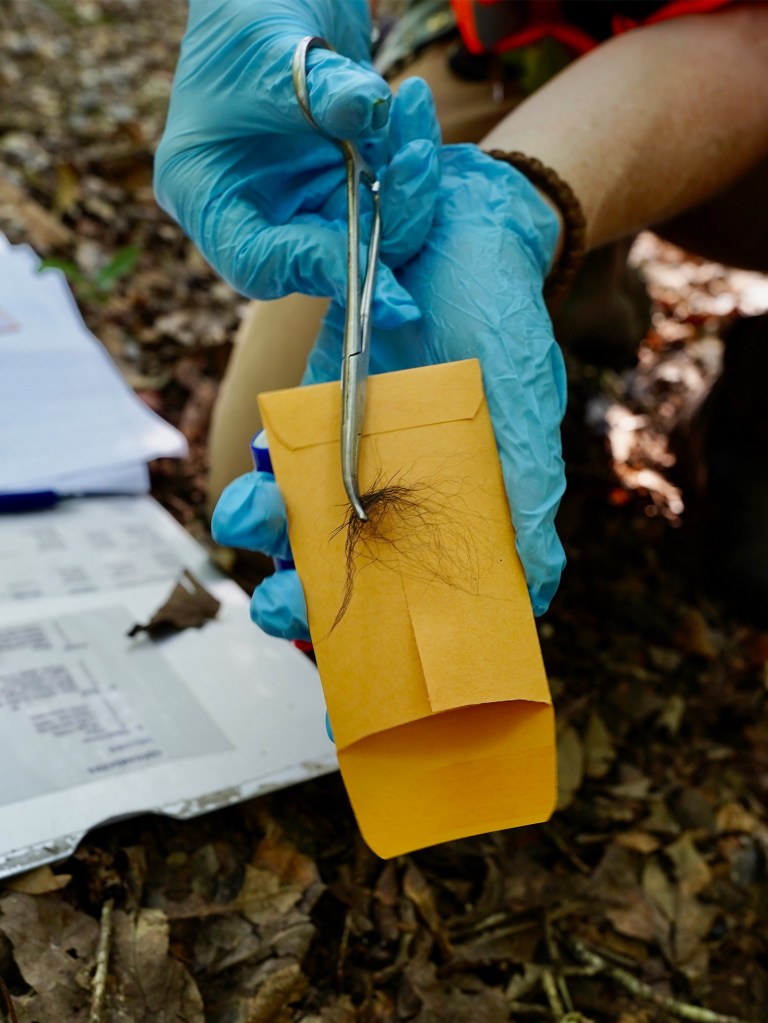
North Carolina Coastal Black Bear Project
Caitlin Brett
Objectives: This study involves 2 years of data collection (summer of 2023, 2024) across a clustered array of over 1,300 baited hair snare sites, which allow for non-invasive collection of hair samples from bears. The project’s primary objectives are to use that data to estimate density, abundance, and genetic structure for the coastal North Carolina black bear population, and to ultimately evaluate population reconstruction models and inform future monitoring and management plans for bears in this part of the state.
Collaborators: North Carolina State University, Mississippi State University, United States Geological Survey, North Carolina Wildlife Resources Commission, Weyerhaeuser Company
Principal Investigators: Nathan Hostetter, Dana Morin, Colleen Olfenbuttel
Funding: North Carolina Wildlife Resources Commission
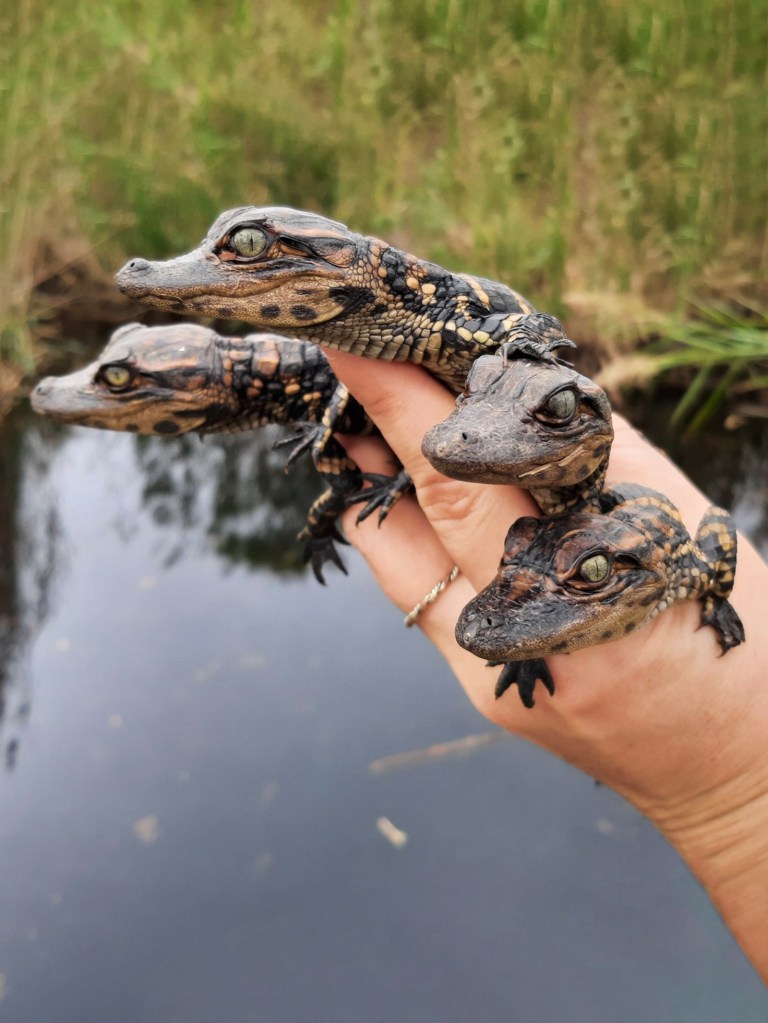
American Alligator Ecology in North Carolina
Alicia Davis Wassmer
Objectives: The goal of this project is to analyze and evaluate currently available alligator data to estimate occupancy and relative abundance via spotlight surveys, evaluate the ability of spotlight surveys to provide adequate information for monitoring programs, and investigate approaches to estimate demographic rates and abundance using a case study of an intensively studied alligator population at Lake Waccamaw. Results of this work provide direct evaluations of current alligator monitoring efforts in North Carolina (spotlight surveys, mark-recapture methods) and the development of approaches that can extend to regional- and statewide alligator research and management programs in North Carolina.
Collaborators: North Carolina State University, United States Geological Survey, North Carolina Wildlife Resources Commission
Principal Investigators: Nathan Hostetter, Krishna Pacifici
Funding: N.C. State University, North Carolina Wildlife Resources Commission

Population dynamics and harvest susceptibility of white-tailed deer across an urban-rural gradient
Jared Lamb
Objectives: This research will investigate how population dynamics of white-tailed deer change along an urban-rural gradient. Along with this, harvest susceptibility will be estimated across the gradient. These topics will be applied to future landscape models to help inform and direct management decisions going forward throughout North Carolina. More information at: www.facebook.com/NCurbandeerstudy
Collaborators: N.C. State University, North Carolina Wildlife Resources Commission, United States Geological Survey, United States Forest Service, North Carolina Museum of Natural Sciences
Principal Investigators: Nathan Hostetter, Chris Moorman, Nils Peterson, Liz Kierepka, John Kilgo
Funding: North Carolina Wildlife Resources Commission, N.C. State University
Some Past Projects
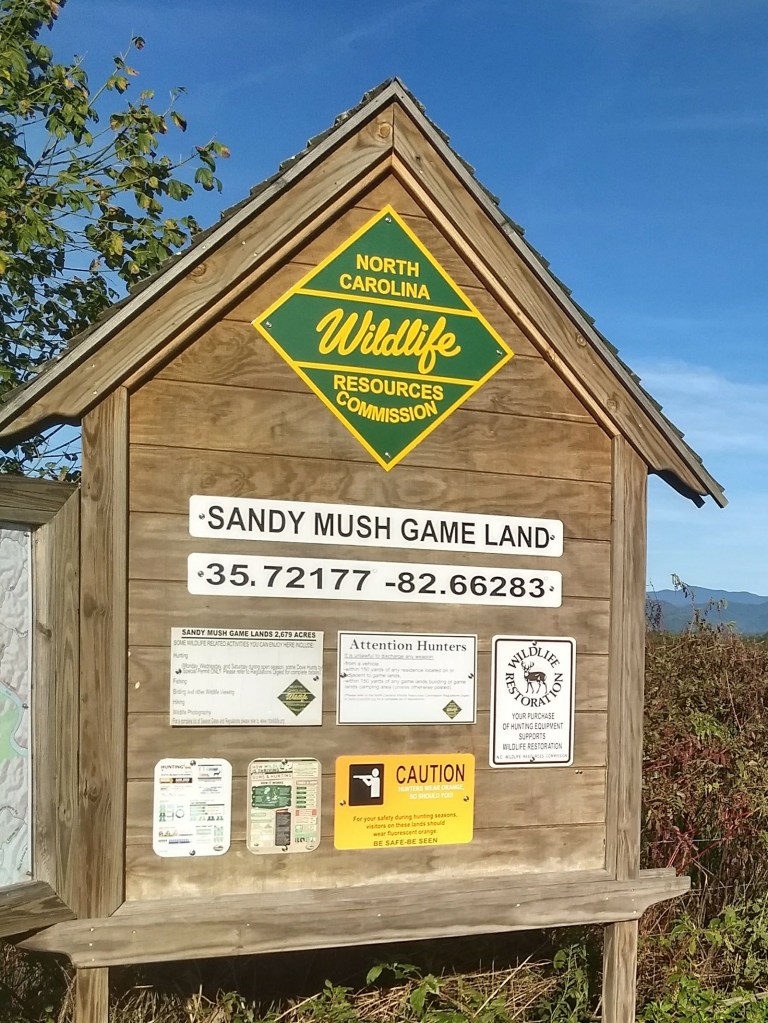
Determining Use, Economic Impacts and Value of Wildlife Management Areas
William Casola
Objectives: Wildlife Management Areas (WMAs) experience high use from a diversity of recreational user groups making it important for state conservation agencies and other stakeholders to understand the environmental, social, and economic impacts associated with these properties. This research project seeks to understand how recreational visitors to wildlife management areas use WMAs and how WMAs affect local economies. We are investigating the market and non-market value of WMAs, by estimating their impact on local property values, their non-market value to visitors and the economic contribution of recreation on WMAs.
Collaborators: N.C. State University, North Carolina Wildlife Resources Commission
Funding: North Carolina Wildlife Resources Commission
Principal Investigators: Krishna Pacifici
Publications:
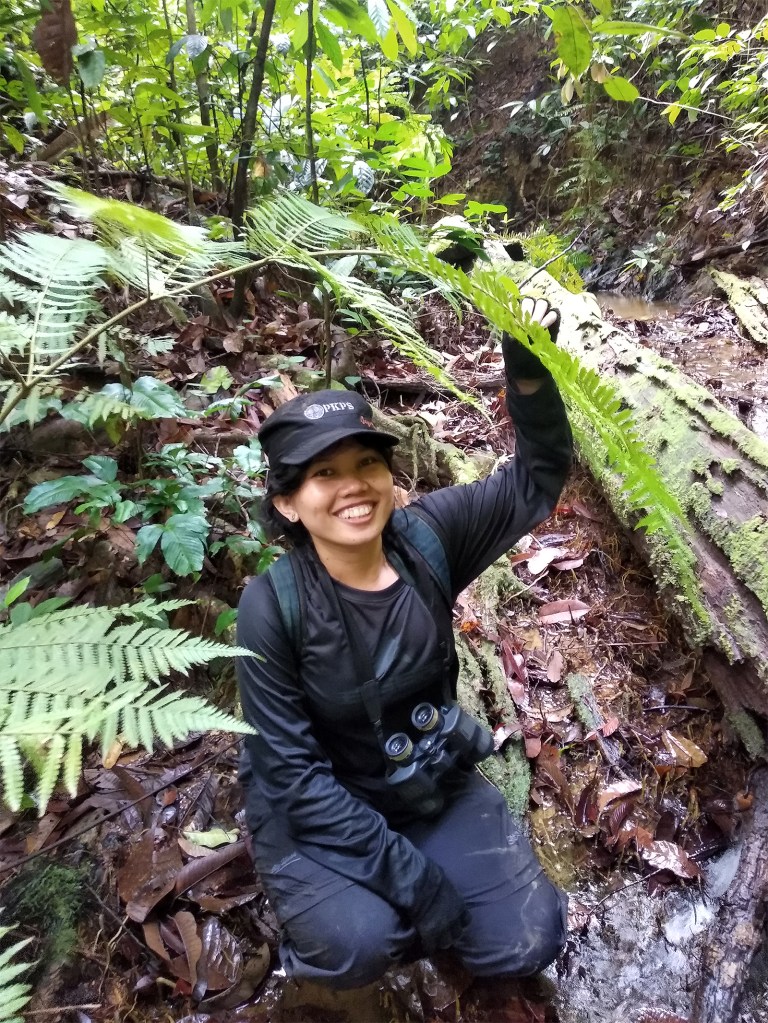
Bird Communities in the Fragmented Forest Landscape of West Kalimantan, Indonesia
Trifosa Simamora
Objectives: This research focused on understanding bird communities in the fragmented forest landscape of West Kalimantan, Indonesia. This research developed Bayesian hierarchical models to the detection/non-detection data for the bird community, which accounts for false negatives and estimates species richness and the effects of different land management practices. This research evaluated the bird community response to environmental covariates, finding the most vulnerable group species to land conversion, and make predictions of future forest fragmentation scenarios and hidden dynamics.
Collaborators: N.C. State University, North Carolina Wildlife Resources Commission
Funding: CIFOR/USAID (Governing Oil Palm Landscapes for Sustainability), Collaborating to Operationalise Landscape Approaches for Nature, Development and Sustainability (COLANDS) CIFOR, ICRAF
Principal Investigators: Krishna Pacifici, Yves Laumonier
Publications:
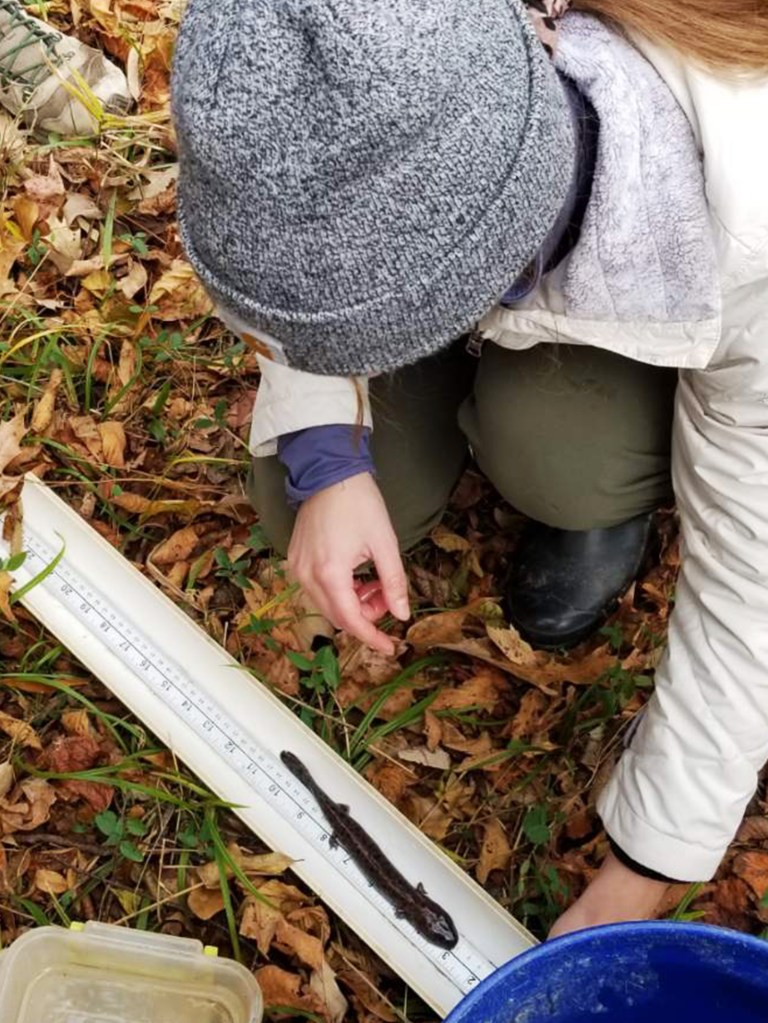
An Examination of the Weight-Length Relationship for the Neuse River Waterdog
Brieana Shook
Objectives: This research involves utilizing morphometric data collected from the endemic and federally threatened Neuse River Waterdog. My goal is to gain valuable insight and a baseline analysis of a weight-length relationship to compare with variation among habitat or environmental characteristics. This analysis will be beneficial to make best management practices aiding in recovery decisions in an increasingly changing environment.
Collaborators: N.C. State University, North Carolina Wildlife Resources Commission, United States Fish and Widlife Service
Funding:
Principal Investigators: Krishna Pacifici
Publications:

Jointly Estimating Abundance, Demographic Rates, and Movement
Nathan Hostetter
Objectives: Investigate spatio-temporal variation in polar bear abundance, movement, and demographic rates through the development of field protocols and integrated modelling approaches linking mark-recapture, telemetry, count, and age data.
Collaborators: University of Washington, U.S. Geological Survey – Washington Cooperative Fish and Wildlife Research Unit, U.S. Geological Survey – Patuxent Wildlife Research Center, U.S. Fish and Wildlife Service, Environment and Climate Change Canada, Polar Science Center – University of Washington
Funding: North Pacific Research Board, U.S. Geological Survey, U.S. Fish and Wildlife
Publications:
Hostetter NJ, EV Regehr, RR Wilson JA Royle, and SJ Converse. 2022. Modeling spatiotemporal abundance and movement dynamics using an integrated spatial capture-recapture movement model. Ecology. 103:e3772.
Gardner B, BT McClintock, SJ Converse, and NJ Hostetter. 2022. Integrated animal movement and spatial capture-recapture models: simulation, implementation, and inference. Ecology. 103:e3771.
McClintock, BT, B Abrahms, RB Chandler, PB Conn, SJ Converse, RL Emmet, B Gardner, NJ Hostetter, and DS Johnson. 2022. An integrated path for spatial capture–recapture and animal movement modeling. Ecology 103:e3473.
Hostetter NJ, NJ Lunn, ES Richardson, EV Regehr, and SJ Converse. 2021. Age-structured Jolly-Seber model expands inference and improves parameter estimation from capture-recapture data. PLOS One 16:e0252748.
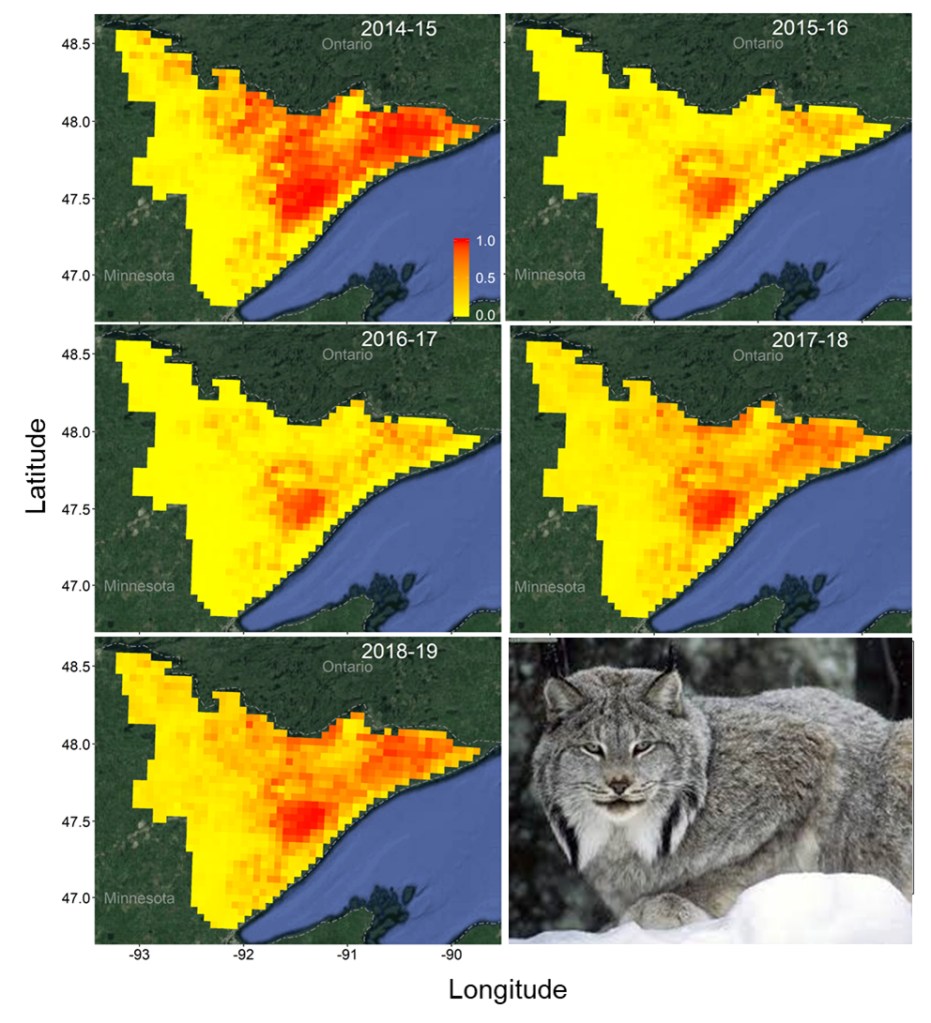
Spatiotemporal Occupancy Dynamics At A Species Range Boundary
Nathan Hostetter
Objectives: Develop a large-scale monitoring protocol and dynamic occupancy modeling framework to track spatiotemporal Canada lynx occurrence, link occupancy dynamics to landscape covariates, and identify multi-year core use areas at the southern periphery of the species range.
Collaborators: Superior National Forest, U.S. Fish and Wildlife Service, University of Washington
Funding: U.S. Fish and Wildlife
Publications:
Hostetter NJ, D Ryan, D Grosshuesch, T Catton, S Malick-Wahls, TA Smith, and B Gardner. 2020. Quantifying spatiotemporal occupancy dynamics and multi-year core-use areas at a species range boundary. Diversity and Distributions. 26:795–805.
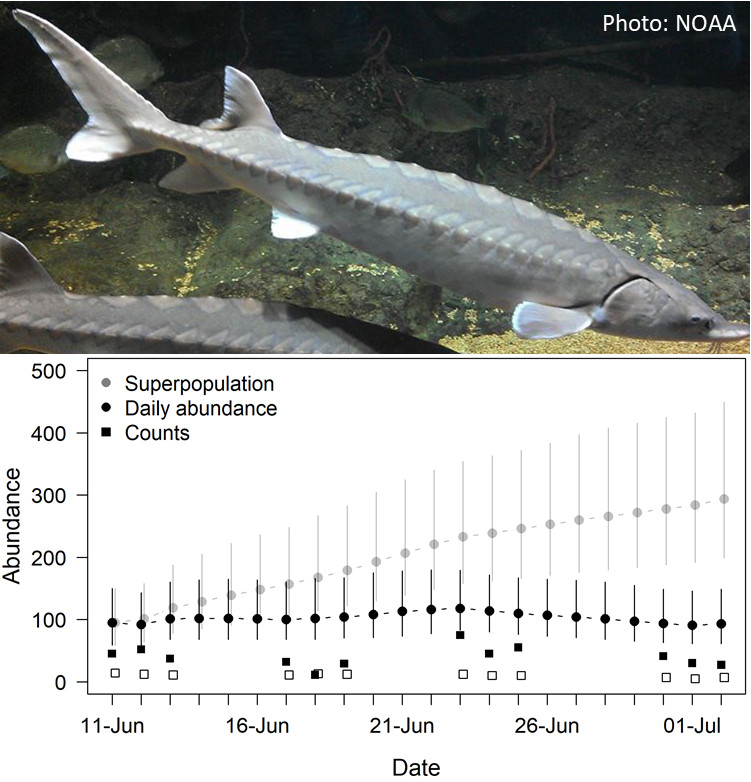
Migration Dynamics and Spatiotemporal Abundances
Nathan Hostetter
Objectives: Integrate count and mark-resight data to jointly estimate abundance and migration dynamics. We apply these methods to estimate Atlantic sturgeon spawning abundances, the cumulative number of individuals that used the spawning area (i.e. superpopulation), and variation in individual-level arrival and departure timing in the Hudson River, New York.
Collaborators: Cornell, Delaware State University, University of Delaware, University of Washington – Washington Cooperative Fish and Wildlife Research Unit, U.S. Geological Survey
Funding: National Marine Fisheries Service, the Hudson River Foundation Bain Fellowship Program, DuPont Clear into the Future Program
Publications:
Kazyak DC, AM Flowers, NJ Hostetter, JA Madsen, M Breece, A Higgs, LM Brown, JA Royle, DA. Fox. 2020. Integrating side-scan sonar and acoustic telemetry to estimate the annual spawning run size of Atlantic sturgeon in the Hudson River. Canadian Journal of Fisheries and Aquatic Sciences 77:1038–1048.
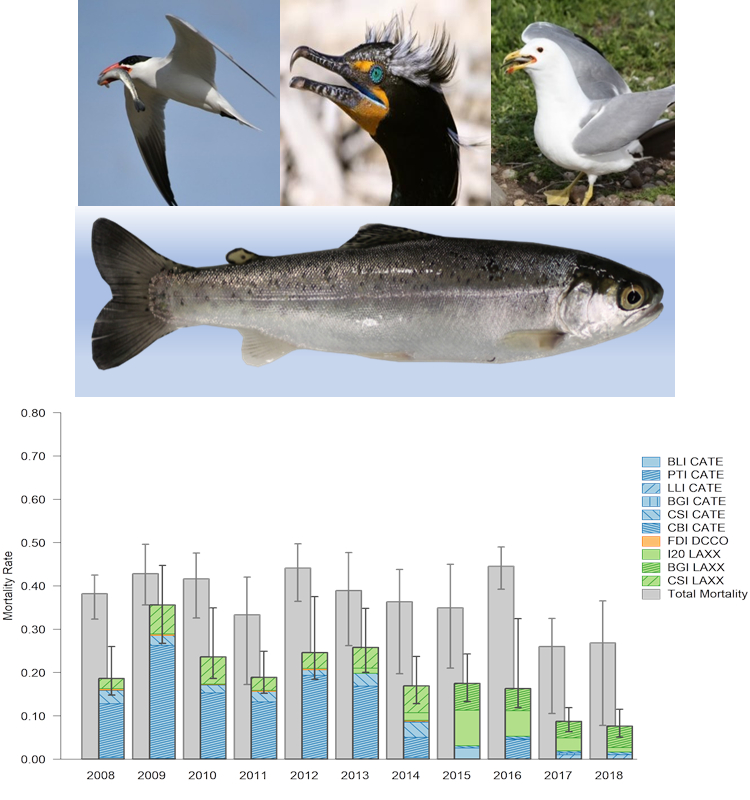
Quantifying the Impact of Predation on Prey Populations in Complex Multi-predator Systems
Nathan Hostetter
Objectives: Multi-year study investigating Endangered Species Act listed salmonid survival, predator-prey dynamics, and the impacts of colonial waterbird predation on population recovery.
Collaborators: Oregon State University, Real Time Research Inc., University of Washington, U.S. Geological Survey – Oregon Cooperative Fish and Wildlife Research Unit
Funding: Bonneville Power Administration, Grant County Public Utility District, Oregon Department of Fish and Wildlife, U.S. Army Corps of Engineers
Publications: (>10 peer-reviewed publications)
Hostetter, NJ, AF Evans, Q Payton, DD Roby, DE Lyons, and K Collis. 2023. A review of factors affecting the susceptibility of juvenile Salmonids to avian predation. North American Journal of Fisheries Management 43:244–256.
Hostetter NJ, Q Payton, DD Roby, K Collis, and AF Evans. 2022. Functional responses across species, space, and time: How piscivorous waterbirds respond to pulses in fish abundance. Ecosphere. ecs2.4220.
Payton Q, AF Evans, NJ Hostetter, DD Roby, BM Cramer, and K Collis. 2020. Measuring the additive effects of predation on prey survival across multiple spatial scales. Ecological Applications. 30:e02193
Evans AF, Q Payton, BM Cramer, K Collis, NJ Hostetter, DD Roby, and C Dotson. 2019. Cumulative effects of avian predation on upper Columbia River steelhead. Transactions of the American Fisheries Society. 148:896–913.
Payton Q, NJ Hostetter, and AF Evans. 2019. Jointly estimating survival and mortality: integrating recapture and recovery data from complex multiple predator systems. Environmental and Ecological Statistics. 26:107–125.

Abundance and the Components of Detection Probability in Unmarked Populations
Nathan Hostetter
Objectives: We develop a framework to estimate abundance in unmarked populations by integrating common survey methods including spatially and temporally replicated counts, distance sampling, and time-of-detection data. Application of these approaches are used to estimate Island Scrub-Jay abundance for the available, present, and superpopulation of individuals, and tease apart the detection processes for presence during a survey, availability given presence, and detection given availability and presence.
Collaborators: Migratory Bird Center – Smithsonian Conservation Biology Institute, North Carolina State University, University of Washington
Funding: The Nature Conservancy, University of California’s Santa Cruz Island Reserve, North Carolina State University
Publications:
Hostetter NJ, B Gardner, TS Sillett, KH Pollock, and TR Simons. 2019. An integrated model decomposing the components of detection probability and abundance in unmarked populations. Ecosphere. 10:e02586.

Optimizing Release Strategies for Species Reintroductions
Nathan Hostetter
Objectives: Evaluation of alternative management strategies enables informed decisions to accelerate species recovery. Here, we develop a novel multievent modelling framework integrating encounter history and biotelemetry data to evaluate the success of reintroduction strategies for the critically endangered Vancouver Island marmot. Results from this work provide a generalizable framework to evaluate species reintroduction programs and have directly informed the management of Vancouver Island marmots.
Collaborators: Calgary Zoo, Marmot Recovery Foundation, University of Washington, U.S. Geological Survey – Washington Cooperative Fish and Wildlife Research Unit
Funding: Fish and Wildlife Compensation Program, Ministry of Forests, Lands and Natural Resource Operations
Publications:
Lloyd NA, NJ Hostetter, CL Jackson, SJ Converse, and A Moehrenschlager. 2019. Optimizing release strategies: a stepping-stone approach to reintroduction. Animal Conservation 22:105–115.
Lloyd NA, NJ Hostetter, CL Jackson, SJ Converse, and A Moehrenschlager. 2019. Future directions to escalate benefits of the stepping-stone approach for conservation translocations. Animal Conservation 22:122–123.
 Quantitative Ecology Lab - NCSU